* Click each photo to see the detail.
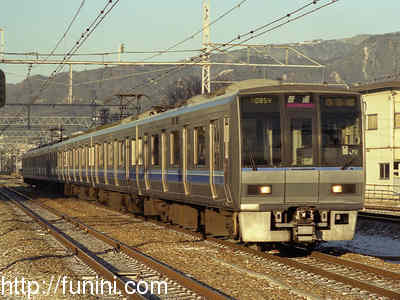
Series 207 is the first commuter train of JR-west. The stock was built from 1991 to 2002, with some breaks. The style is influenced by other private railway companies in Kansai area, such as Hankyu. After the derail accident, the outfit is changed to dark blue and orange.
Series 207 in old blue outfit, before Amagazaki Accident. Fiest, series 207-0 and 207-100 were put into serive in Gakkentoshi (Katamachi) and Fukuchiyama Line. Later on, 207-1000 were built for Tokaido-Sanyo line. Before the openeing of Tozai line, all the trainsets consisted of 7-cars.
Osaka loop line is one of the busiest line in Osaka. It connects north center (Umeda) and southe center Tennoji. Orange stocks are mainly used for loop services, but many other trains run from suburban lines. Tradutional Kokutetsu (Japan national railway) series 103 is decreasing, and newer stock 201 is now the main force.
Umeda Freight Terminal occupies large part in the north downtown of Osaka. Umeda-kita yard has been sold, but container freight terminal is still used in 2010. This terminal is planned to move to Suita, and the scenary will greatly be changed.
* Click each photo to see the detail.
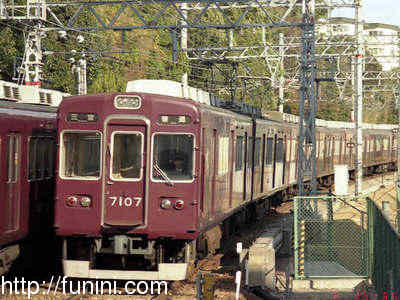
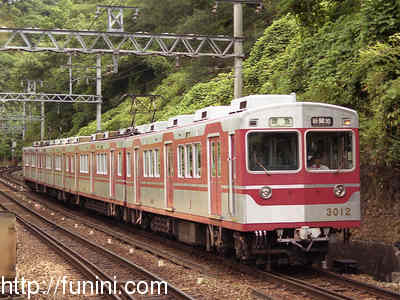
Hankyu is a private railway operating around Osaka. Its lines reach Kyoto (old capitol), Kobe and Takaraduka. Its cars are famous for their brown (maroon) color and their nice condition. Three companies run from Osaka to Kyoto or Kobe, so they need to prepare competitive cars. The photo shown below is taken in a minor branch line of Hankyu.
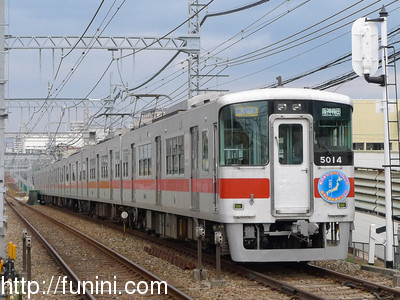
Hanshin Railway runs from Osaka (Umeda) to Kobe (Motomachi). Although its length is shortest among Japanese major private railway companies (around 50km), they have frequent services (every 3 minutes in daytime). Hanshin is also famouse for owning a famous baseball team (Hanshin Tigers). The ground is located in Koshien.
* Click each photo to see the detail.
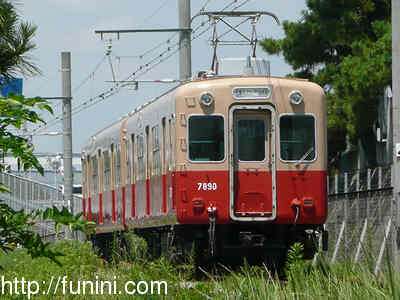
Series 1984 Hanshin series 8000 were put into service in 1984. Although the first 6 cars have traditional design, latter series have simple window without a grazing bar and large front window. After 15 stocks have deadly damaged in Great Hanshin Earthruqake in 1995, 114 stocks are now being used.
Since 2002, renovation of series 8000 is going on. Some cars are equipped with cross seats, and their outfit is changed to orange and white. Three prototype cars were also removated, becoming a unique style. In 2009, 42 cars in 7 trainsets are serving for limited express from Umeda to Hineji.
Series 9000 were built in 1996, to suppliment missing stocks in Hanshin Earthquake. They are the first stainless stocks with black front. Since 2009, they run through Hanshin Namba line to Kintetsu Nara line. They can merged with series 1000, mainly used in Rapid-express services.
Series 9300 were built from 2001. As direct services to Sanyo railway have begun, they are equipped with cross seats, which are used for long distance train. The steal body is painted in new outfit: orange and white. They are the last series built in Mukogawa Car Manufactueing. Eighteen cars in 3 trainsets are used.
Type 5311 is the oldest "Jet Car" in 2008. Jet Car in Hanshin railway has the largest accelaration power in Japan.
Series 5500, built from 1995, are designed for local serivces with high acceleration power. The first group took turns with damaged stocks in the great Hanshin Earthquake. They are the first group having inverter motors and bolster-less bogies. A number of 26 cars are used in the Hanshin main line.
* Click each photo to see the detail.
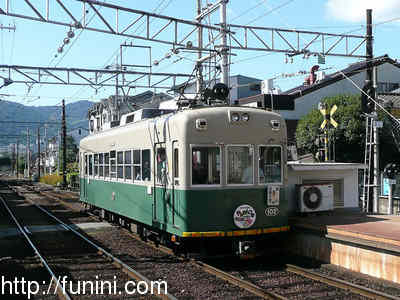
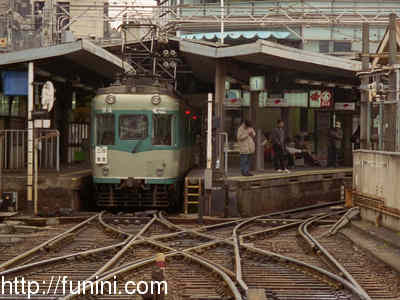
Keihan class 80 was used in Keishin tram line from Sanjo to Shinomiya in Kyoto city. The stocks have already withdrawn, because new subway Tozai line has opened, and Keishin line has startted going-through service.
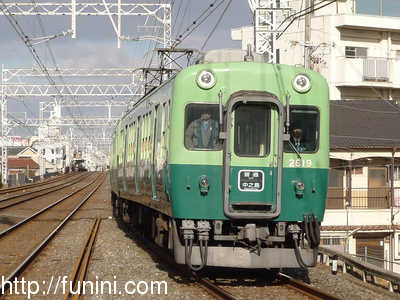
Keihan Series 260 and 350 were built from 1956. They had refurblished from older stocks built in 1920s, with nose suspension drive.
* Click each photo to see the detail.
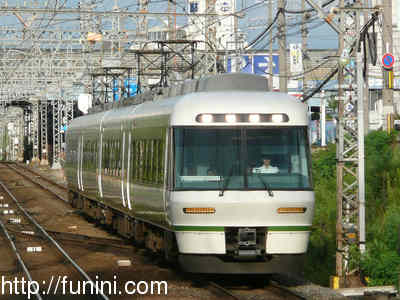
Kintetsu is the biggest private railway company in Japan (except for JR). Minami-osaka-sen (literally, South-osaka line) is very unique, since it equipped with narrow gauge track. (usual Kintetsu lines have standard gauge.) Since the gauge is different, stocks are also different from other lines.
* Click each photo to see the detail.
The Port island and Rokko island is landfill in Kobe. Kobe city is wedged between sea and mountain, so they cut the mountain and filled the sea. Two light railway were built for these islands. They operated automatically: no conductors, no drivers.
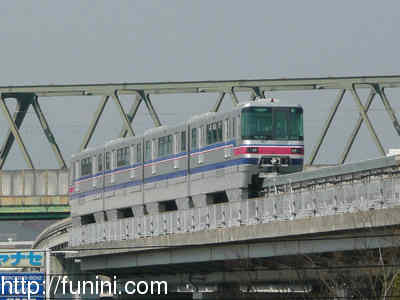
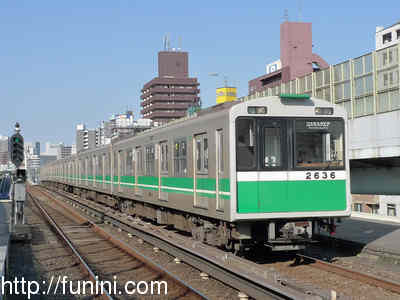
Osaka monorail is the longest monorail line in the world. It circuly connects exsiting lines departing from Osaka, greatly improved the access to suburaban areas in Senri, Suita and Osaka Airpot. Stocks are slightly different depending on the introduced years.
Kobe has two different subway system, Kobe Rapid Railway and Kobe Subway. While the former connects interurban private railways such as Hankyu and Hanshin, the latter is self-absorbed system.
* Click each photo to see the detail.
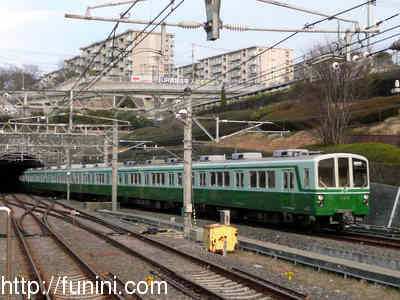
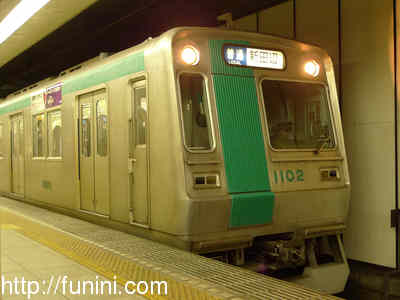
Kobe Subway has Yamate and Kaigan (Coast) Line. Although Yamate Line consists of three diferent parts, or Seishin, Yamate and Hokushin line, it is integrally operated with green stocks.
EMU Series 1000 is the first rolling stocks in Kobe Subway, built in 1977. The front design is bilaterally symmetric. Their alminum 19m body, silver windowframe and wooden-pattern interior are similar to Hankyu stocks. All the trainsets consist of 6 cars. The motors were controlled by chopper at first, but now being replaced by inverter-controlled.
Series 2000 has a different front shape, but identical in other features. Only 4 trainsets 24 cars were built, and used from Seishin-Chuo to Shin-kobe. Seishin, Yamate and Hokushin-kyuko line only have local services, but the line is straight, and playing a great roll of the growth of north Kobe.
EMU Series 3000, built in 1993, has a bit different livery, equuipped with inverter control. The series were used for rapid services from 1993 to 1995. 6 trainsets of 36 cars were built, keeping the position of newest for 17 years.
EMU Series 5000, built in 2000, are used in Kaigan line. One stock has two 135kw linear motor (coil), and the coil interacts with the track coil between the rail, generating acceleration power. The body length is 16m. A total of 40 trainsets, 40 cars are in service.
Hokushin Railway runs from Shin-kobe to Tanigami, as an extension of Kobe subway. Most of the lines are a tunnel under the Rokko mountain. EMU Series 7000, built in 1988, has light-brown body and Hankyu-like interior. They are used together with stocks of Kobe subway.
Series 5000 is designed for Kaigan Line. It has linear motor system, which interacts with reaction plate between the two rails. Low floor hight and small body make it possoble to reduce the construction cost. Although the line runs downtowns like Sannomiya, Motomachi and Harbor land, number of passengers are half of the expectation.
Myohouji Station is a station in Kobe subway Seishin line. The station was opened in 1977, and the one of the oldest station in Kobe subway. The station is in the middle of tunnels, and surrounded by mountains.
* Click each photo to see the detail.
| funini.com -> Train -> Osaka, Japan |
|