Photos of Japanese Trains

As has shown in Shinkansen, Japanese railway system has achieved great success in the last 50 years. Because of its large population and mountainous landfield, the railway has kept about 30% of the domestic transportation share, and more than 50% of the urban transportation. Subway and JR (elevated railway) cover most of the Tokyo metropolitan area. Ten-cars trains come every 2 minutes in the morning, but obviously their capacity is not enough for enormous numbers of commuters.

Comparing to other countries, one charactristic in Japanese railway system is the role of private railways. Some private railway companies sell houses along with their lines, operate amusement parks and transport commuters. There are 10 big train companies and more than 50 small ones. Each of them has original rolling stocks with different colors and styles.

There was a national railway (called Kokutetsu) in Japan, but now it is privatized and splitted into 7 private companies called JR -- Japan Railway. They operate Shinkansen, inter-city expresses, regional services and urban area transport. The privatization was apparently successful, as is shown that they do not require any financial aid from the government in recent years. (Kei)

Choose the type of trains from the followings:

Railway in Hokkaido

Hokkaido is the northest island in Japan. The biggest city Sapporo has more than one million populations, but many other part of the lands are dairyard. While Sapporo city transport operates Sapporo subway and tram, JR-Hokkaido operates every other regional and long-distance train.
* Click each photo to see the detail.

EMU 721

EMU 721

Series 721 are the most commonly seen trainset near Sapporo. It has bright color interior and superior performance comaring to previous 711 stocks. Series

EMU 731, DMU 201

EMU 731, DMU 201

EMU 731, with side seats, are mainly used as local services. They can run together with DMU 201.

EMU 711

EMU 711

Series 711 is the first rolling stock in Hokkaido. To keep warmth during the winter, the windows are doubled and doors and rooms are separated with inner doors.

DMU 140, 150

DMU 140, 150

DMU 54

DMU 54

DMU 40-100

DMU 40-100

DMU Series 40 (called kiha 40) are developed by JNR, Japan National Railway. Many cars are inroduced in 1970s to replace older DMU 10 series. Sub-series 40-100 for Hokkaido are equipped with double windows and decks.

JR-Hokkaido Express

JR-Hokkaido Express

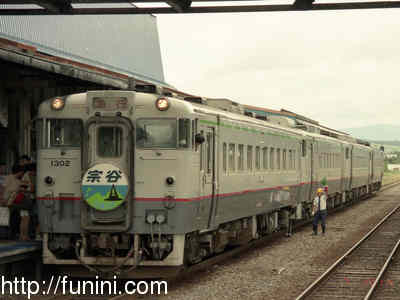
Exp. Soya for Wakkanai

Exp. Soya for Wakkanai

Asahikawa Railway

Asahikawa Railway

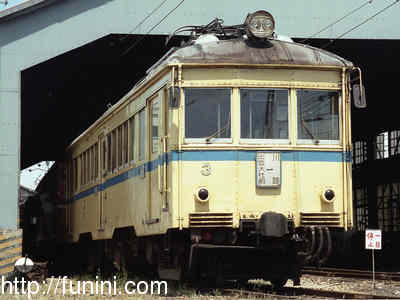
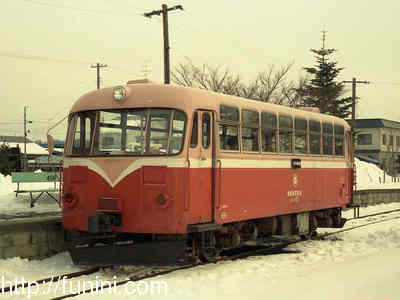
Asahikawa Electric Railway was the northest electric railway until 1973. Now all the lines are closed, but two stocks are preserved in a museum and a community center.

Trains in Tohoku District

* Click each photo to see the detail.

JR-East EMUs in Tohoku

JR-East EMUs in Tohoku

Senseki Line in Sendai

Senseki Line in Sendai

Senseki line runs near Sendai city. Older stocks from Tokyo are beautifully refurblished and used.

Nambu-Jukan Railway

Nambu-Jukan Railway

Blue Train (night train)

Blue Train (night train)

Shinetsu (Nagano and Nigata)

* Click each photo to see the detail.

JR-East Shinetsu-Line Usui Sam

JR-East Shinetsu-Line Usui Sam

JR-East EMUs in Nagano

JR-East EMUs in Nagano

JR-East DMUs in Nagano

JR-East DMUs in Nagano

Hokuriku (Fukui, Kanazawa and Toyama)

* Click each photo to see the detail.

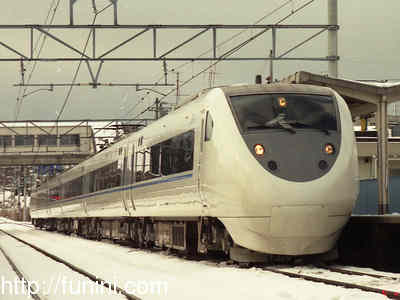
JR-West EMUs in Hokuriku

JR-West EMUs in Hokuriku

JNR/JR EMU Series 485

JNR/JR EMU Series 485

JR-West DMUs in Hokuriku

JR-West DMUs in Hokuriku

Toyama Chitetsu

Toyama Chitetsu

Fukui Railway

* Click each photo to see the detail.

Fukui Railway EMU 80, 140, 120

Fukui Railway EMU 80, 140, 120

Fukui Railway EMU 200

Fukui Railway EMU 200

Fukui Railway EMU 300

Fukui Railway EMU 300

Fukui Railway EMU 600

Fukui Railway EMU 600

Hiroden: Hiroshima Tram

* Click each photo to see the detail.

Hiroden Series 700

Hiroden Series 700

Hiroden Type 900

Hiroden Type 900

Hiroden Series 3000

Hiroden Series 3000

Chugoku, Sanin

* Click each photo to see the detail.

JR-West DMU 181

JR-West DMU 181

JR-West DMU 58

JR-West DMU 58

JR-West DMUs in Sanin

JR-West DMUs in Sanin

JR-West EMU 113

JR-West EMU 113

JR-West EMUs in Hiroshima

JR-West EMUs in Hiroshima

Sunrise Express (EMU 285)

Sunrise Express (EMU 285)

Ichibata Railway

Ichibata Railway

SL Yamaguchi

SL Yamaguchi

EMU Series 42

EMU Series 42

Chidu Railway

Chidu Railway

Hiroshima Astram Line

Hiroshima Astram Line

Trains in Shikoku Island

* Click each photo to see the detail.

JR Shikoku DMUs

JR Shikoku DMUs

JR Shikoku takes charge of railway services in Shikoku. The northern lines from Takamatsu to Matsuyama and the Seto Bridge Line is electrified, but other lines are served by diesel stocks. Pictures were taken near Kochi and Tokushima at March, 1998.

JR Shikoku, DMU 185, 2000

JR Shikoku, DMU 185, 2000

JR Shikoku EMUs

JR Shikoku EMUs

Tosa Tramway in Shikoku

Tosa Tramway in Shikoku

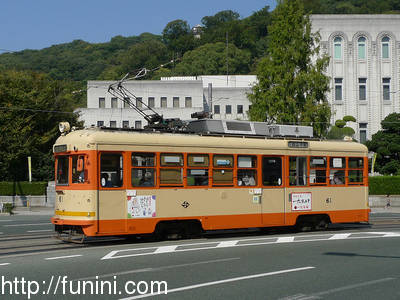
Matsuyama Tram

Matsuyama Tram

Okinawa, Naha

* Click each photo to see the detail.

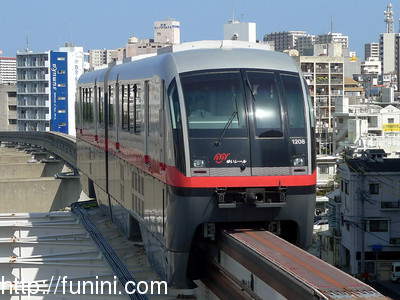
Naha Monorail

Naha Monorail

機関車


☆写真をクリックすると、詳細が表示されます。

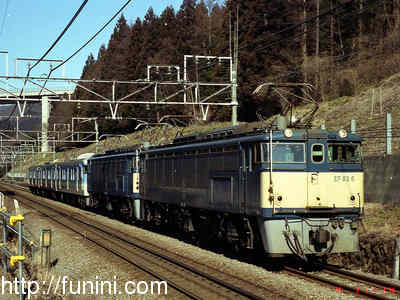
JR/JNR EF65

JR/JNR EF65

JR/JNR 電気機関車

JR/JNR 電気機関車

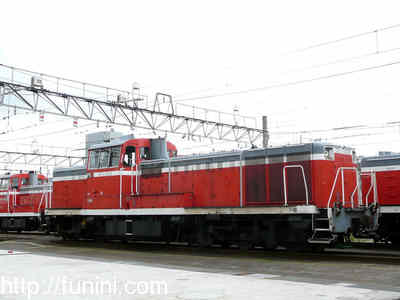
JR/JNR ディーゼル機関車

JR/JNR ディーゼル機関車

夜の田端機関区

夜の田端機関区

夜の田端機関区で撮影した機関車です。